OCHIN-ADVANCE Clinical Research Network (CRN) developed a request form for researchers to engage with their Patient Engagement Panel (PEP). This can be used as a template by stakeholders when creating utilization request forms to engage patient groups.
Patient Engagement
Patient Engagement Panel (PEP) Proposal Review Template Presentation
OCHIN-ADVANCE Clinical Research Network (CRN) developed this template for researchers to use when discussing proposals with a Patient Engagement Panel (PEP). The template provides a structure for introducing the research study proposal, planned engagement, and how the PEP may support the study.
‘Haven’t We Always Done This?’ Greg Merritt’s Journey to Normalize Patient Partnership in National-Scale Research
When Greg Merritt, a Patient Partner on the PCORnet® Steering Committee, first learned about the ADAPTABLE study in 2016, he was stunned. As a heart attack survivor who had been taking aspirin since 2012, he couldn’t believe that researchers were just now launching a study of 15,000 participants to determine optimal aspirin dosage for secondary prevention of heart attacks and strokes.
“Don’t we already know this?” Greg wondered. Like many patients, he had assumed these basic questions about common treatments had long been answered through large-scale research.
The reality surprised him. Without networks like PCORnet®, conducting research at a national scale is enormously challenging. “I had no idea that enrolling 15,000 patients was a big deal,” Greg reflected. “I just assumed this was how research was always done when it came to questions that affect millions of people.”
The truth is far different. Most clinical studies involve only a few hundred participants and rarely capture America’s population. This revelation sparked something in Greg—a dedication to transforming healthcare research. He envisioned a system where large, representative studies become the norm for addressing critical health questions, with patients involved every step of the way.
From Participant to Partner
Greg joined the ADAPTABLE study as one of its Patient Partners, known as “Adaptors.” As he became more involved, he noticed a gap: patients rarely had a voice in shaping research questions or study designs. At the time, incorporating the patient voice in research was still in its early stages, but PCORnet was paving the way for a future where patients were included from the very beginning. When Greg was invited to join the PCORnet® Steering Committee in 2019, he saw a chance to address this gap head-on by using his voice to shape and improve research powered by the national-scale, patient-centered infrastructure.
The journey from participant to partner would take some time. Greg found himself thrust into complex discussions about the PCORnet® Common Data Model and study designs, most of which were still a mystery to him.
“I spent the first year just trying to get up to speed,” Greg said. “During that time, I could see that the principal investigators and Steering Committee leadership were eager for my input, but I was worried that I would derail important conversations if I asked too many questions.”
Fortunately, Greg had support from other Patient Partners like Neely Williams and Nadine Zemon, who helped him navigate this new world. “With Neely and Nadine’s help, I found my voice. Now, the three of us cause more good trouble than most on these Steering Committee meetings,” he said with a smile.
At times, that “good trouble” is pointing out an overly burdensome requirement in a protocol that investigators may not flag as a recruitment risk, but that patients understand would be a barrier to participation. Other times, it may be questioning the endpoints of a study to ensure it delivers results that are truly helpful to those the research aims to benefit.
“We are not experts in clinical research, but we are experts in what it is like to be a patient considering participation in a clinical trial—and for a research team designing a study, that expertise can be quite valuable,” he said.
That value is reflected in a deeper integration of the patient perspective in the Steering Committee since Greg joined. For example, the Steering Committee recently began setting aside dedicated time at the end of each meeting for Patient Partners to understand what was discussed at the meetings and pose questions. The number of Patient Partners on the committee has also grown from three to eight, achieving an important balance by elevating patient voices to equal standing with research investigators.
“In its first decade, the PCORnet infrastructure has made great strides in helping researchers embed the patient voice at every level,” Greg said. “The increase in Patient Partners and the dedicated time for our input are significant steps toward true collaboration, where patients and researchers work side by side to shape the future of health research.”
A Vision for the Future
As Greg and others like him look ahead to the next 10 years, they envision a future in which large-scale research is not an exception but the rule, especially for answering fundamental health questions. With established connections and insights from everyday encounters with nearly 47 million people across the U.S. in 2024, the PCORnet infrastructure is poised to play a key role in making large-scale, patient-centered research a standard practice.
But for this vision to be realized, patient engagement must also continue to evolve. Although PCORnet and others have raised the bar on integrating the patient voice, there is more to be done, particularly in ensuring that engagement efforts include voices from across social and economic backgrounds. There may also be opportunities to rethink how research findings are shared. For example, Greg and other Patient Partners are advocating for methods that go beyond traditional academic journals to make results more accessible and impactful. Podcasts, toolkits for clinical practice, and community forums could all help bridge the gap between research and real-world practice. Patient Partners can be instrumental in making these innovations happen, creating pathways that keep participants engaged even after a study concludes.
“I envision a time when involving patients from the earliest planning stages through to the dissemination of research findings is so ingrained in the research process that no one questions its necessity,” he said. “In 10 years, I want people to look at a study and say, ‘Haven’t we always done this? Was there ever a time we didn’t have Patient Partners guiding us along the way?'”
Are you interested in using PCORnet to power your next research effort? Visit the PCORnet® Front Door to start the conversation.
Patient Reps Power PCORnet’s Steering Committee: A Q&A With Nadine Zemon
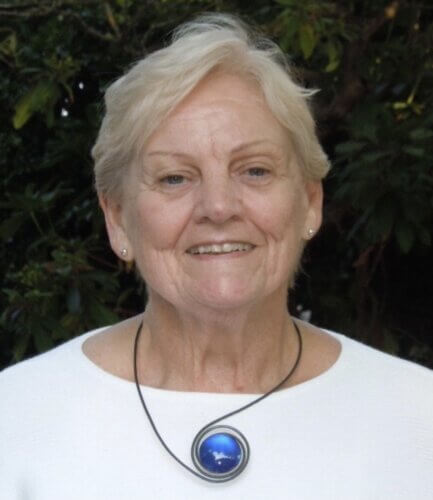 Nadine Zemon can be described as a natural explorer, someone who has sought out new insights and experiences throughout her life. She now brings that relentless curiosity to PCORnet in her role as the newest patient representative on the PCORnet Steering Committee. Never one to be boxed into a single interest area, Nadine spent her younger years exploring dual passions: art and medicine. She has worked as a pediatric emergency room nurse, managed an employee health unit and, with an interest in integrative medicine, practiced massage therapy that incorporated guided imagery techniques of psychosynthesis. Her longtime interest in art led to an appreciation for the value of the arts in medicine and to becoming a graphic designer later in life. Now, Nadine is using her voice on the Committee to infuse the patient perspective into PCORnet-enabled work. Here’s her perspective on this role and why it matters:
What sparked your interest in clinical research?
My mother died of rheumatic heart disease when I was a teenager, which was made all the more tragic because of the fact that she suffered greatly due to a lack of available treatments. As time went on and cardiac care evolved, I marveled at how much more we know now versus then. It made a strong imprint on me about the power of clinical research. My mother’s quality of life could have been completely different if she had experienced her disease today as opposed to 50 years ago. How much more can we help patients 50 years from today?
How did you get involved in clinical research?
I heard about patient-centered research from a friend who was forming the first Citizen Scientists group at the University of Florida. I learned the program was recruiting patients to be involved with the Translational Science program, and I decided to sign up. At the time, the concept of patients having a seat at the research table was so novel, and yet it also made so much sense. I was excited to take part.
What excites you about PCORnet?
The whole idea of patient-centered research excites me. This notion that we should have symbiotic relationships between patients, providers, and researchers feels like it could be a pathway to a whole new era of therapeutic development—one that transforms the “old school” way of conducting research in the best way possible.
How has your role changed as a patient representative in clinical research?
When I first started participating in research, I often doubted my instincts. For example, I might think I was the only one who didn’t understand something, so I wouldn’t speak up. Over time, I’ve learned that if I don’t understand it, most other patients probably won’t either. My voice has become much stronger, and as part of the PCORnet Steering Committee, the patient representatives have actually formalized the process of identifying confusing topics and presenting them to the other Committee members. After each weekly Steering Committee meeting, the patient representatives meet to list areas where we—and the patient community at large—will need more clarity. The Committee is always receptive to this feedback. It is a big part of the value we bring and why we are here!
How do you see the PCORnet Steering Committee evolving in the coming years?
Now that we patient representatives have found our footing on the Steering Committee, we want to find better ways to communicate with other current or prospective patient reps. We are launching a pilot project to connect with patient partners at Clinical Research Networks to open the communication channels. We want to know their thoughts on PCORnet and the Steering Committee, and we also want to share ways they can get involved in research. Our hope is that by starting these conversations, we can engage with new ideas and maybe even inspire the influential patient representatives of the future.
What would you like other patients looking to engage in research to know?
We need your voice in research, and there are so many ways to get involved. Also, you don’t have to have a medical degree to be an effective patient representative; you just have to be willing to share you perspective toward the betterment of research.
How Are Data Tools Improving Pediatric Care? PCORnet® Is Part Of The Answer
Chris Forrest, PCORnet® Steering Committee member and principal investigator for PEDSnet, a PCORnet Network Partner, recently participated in a webinar hosted by U.S. News and World Report entitled “Improving Pediatric Care: How New Data Tools Are Moving the Needle.” The webinar was an exploration of the opportunities for children’s hospitals to use (and share) data to do a faster and more accurate job of diagnosing and treating patients while also improving safety and efficiency. Forrest cited PCORnet®, the National Patient-Centered Clinical Research Network, as an important tool for addressing pediatric challenges and identifying trends over time.
“PCORnet can offer researchers insights from the health records of more than 70 million Americans,” said Forrest on the webinar. He cited as an example that if a researcher wanted to enroll 20,000 kids who have been infected with COVID-19 in a study to explore their phenotypes over the long term, PCORnet can help. The Network offers a breadth of data not available at a single institution, making it a valuable resource for researchers.
Forrest also noted the importance of engaging patients and caregivers to better deploy data tools and move the needle for pediatric research. Patient engagement is a central component of all PCORnet-enabled research.
“We have established regulatory agreements and institutional trust for a national learning collaborative, but we also need to have conversations with families to earn the public’s trust around the bold new ways we can use their data,” he said. “To bring the larger vision of data and technology to life, that bedrock of trust with communities is essential.”
Forrest shared the webinar panel with several other experts:
- Anthony Chang, Chief Intelligence and Innovation Officer, Children’s Hospital of Orange County
- Kathy J. Jenkins, Executive Director, Center for Applied Pediatric Quality Analytics, Boston Children’s Hospital
- Anthony Oliva, Vice President and Chief Medical Officer, Healthcare Division, Nuance
Watch the webinar in full at U.S. News and World Report’s events page.
Patient Reps Power PCORnet’s Steering Committee: A Q&A with Henry Cruz
If you are looking for a reason to get excited about the promise of PCORnet®, the National Patient-Centered Clinical Research Network, look no further than Henry Cruz. He’ll give you 10, and you’ll leave your encounter with him energized and in awe of a guy who grew up the youngest of 12 kids in a low-income community in Brooklyn and now lives in Harlem where he works to bring better community and patient engagement to clinical research. Henry serves as a powerful patient advocate for bringing communities into the research fold. From delivering keynote speeches across Asia and Africa to co-authoring a peer-reviewed article on patient engagement for the American Heart Association, Henry’s life is a lesson in how a single voice can amplify a movement, build a coalition, and make a meaningful difference in the way patients and researchers engage. Now, he’s joined PCORnet’s Steering Committee as one of three patient representatives. Here’s his perspective on his role and why it matters:
What inspired you to take on an active role in clinical research?
I am the youngest of 12 children, and we all have diabetes. Today, there are only three of us alive. Watching our family be impacted over and over again by the same disease made me realize that as patients, we cannot sit back and wait for the answers to come. We have valuable insights that, when paired with research expertise, can move the needle on chronic conditions like diabetes faster than the research community can alone. I began working closely with physicians at Montefiore Medical Center to manage my diabetes and with innovative researchers who restored sight in my left eye. It was this exposure to researchers where I developed respect for the value and impact of clinical research and those who work in this field.
How did you come to partner with the PCORnet Community?
After consulting as a patient representative for Sanofi, Norvo Nordisk, and others for more than 20 years, my partnership with INSIGHT (formerly the New York City Clinical Data Research Network) connected me to the PCORnet Study, ADAPTABLE. I was amazed. The study team was taking a totally new approach to engage a team of patients as partners, empowering them to give input across the study lifecycle. I had previously served on other studies as a patient representative, but for the first time in my life, I played a central and active role in the research process. I was not only invited to the table as a collaborator, but my ideas and opinions were respected—and sometimes helpful!
Because of ADAPTABLE, my worldview on the patient’s role in research changed profoundly. It has been one of the most amazing health experiences of my life, and I became vocal about my passion for helping to implement this approach more widely across research. Fortunately for me, the stakeholders driving PCORnet are passionate about it, too. When they asked me to join the Steering Committee as a patient representative, I didn’t hesitate. It was an immediate “yes.”
What excites you about PCORnet?
In my life, I have come across many, many organizations that advocate the value of “patient-centered research.” The problem is, it was no more than that—a phrase, a thing to say, but not a practice. But that’s not the case within the PCORnet community, which is clear across literally every stakeholder I’ve encountered. PCORnet is a community of people who see patients as partners. At our Steering Committee meetings, I joke that I’m from Brooklyn living in Harlem sitting around a bunch of academic nerds. But that’s what makes PCORnet so groundbreaking! They are changing the way the clinical research community sees patients. They are changing the way we see ourselves. I am humbled to collaborate with these people.
Watching the infrastructure of PCORnet grow excites me nearly as much as the people. I think of the Network as train tracks, crisscrossing the United States and connecting hundreds of learning institutions. It hasn’t been done before now, and it is changing the way research is conducted. Everyone knows we need to find ways to make research faster and less expensive. With PCORnet, we are making it happen, and that is tremendously exciting.
How does your perspective add value to the research process?
The clinical research community is filled with incredibly bright people, but the lived experience of a disease or condition is something that can’t be taught in textbooks. Patients need researchers, and researchers need patients. It’s a partnership. I remember a big moment during one of the first studies I consulted on, a pulmonary trial being conducted through New York University. I went to meet with the principal investigator, who let me know right away that he was meeting with me as a “patient input” requirement of the study. But I’m not shy, so I held my ground, asked questions, and challenged the areas of the protocol I felt merited a second look. As the meeting ended, the investigator slammed his binder closed and said, “You have completely undone our research.” Then, after a beat, he smiled. “But I’m glad. You’ve made it better.”
Since that time, PCORnet and other patient-centered resources have gone a long way toward proving the usefulness of the patient voice across the research community, but this anecdote is still an important reminder to me of the true value of community collaboration. Patients look at a protocol from a different perspective than a researcher, and we can spark ideas and insights that matter. As a patient, this is incredibly validating. Working as a patient partner has unlocked opportunities to put the advocacy I’ve championed for decades into action. It’s next level, and very exciting.
What would you like other patients looking to engage in research to know?
Don’t be intimidated, and don’t sell your lived experience short. Research needs you, and now, thanks to communities like PCORnet, there is a place for you here. Reach out and learn how you can get involved.
This is part one of a three-part series highlighting patient partners on PCORnet’s Steering Committee. Be on the lookout for future Q&As featuring Neely Williams and Kiely Law.